
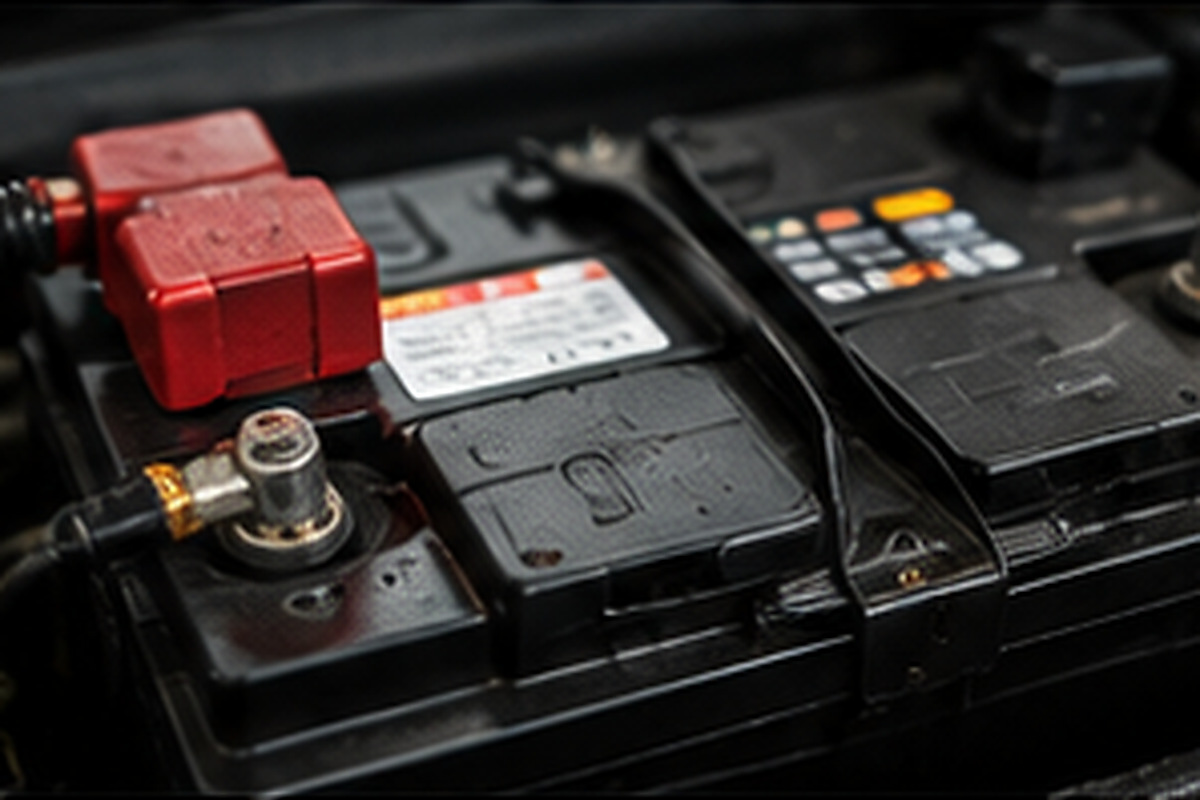
A vehicle that will not start does not automatically need a battery. The battery, cable connections, starter, alternator, ignition controls, security system, and engine condition can create similar symptoms. Testing helps identify the cause before parts are replaced.
Starks Automotive is located at 3937 W Market St, Louisville, KY 40212. Call (502) 776-8925 before visiting to describe exactly what happens when the key is turned or the start button is pressed.
Common no-start and charging symptoms
- No sound: the dash may light normally, dim, or remain dark when a start is attempted.
- Single click: a click may come from the starter solenoid, relay, or another control, but the circuit still requires testing.
- Rapid clicking: repeated clicking often accompanies low available voltage or a poor connection.
- Slow cranking: the engine turns more slowly than normal, especially after sitting or during cold weather.
- Normal cranking but no start: the starter turns the engine, but fuel, ignition, compression, timing, security, or another control issue prevents it from running.
- Battery warning light: the light generally indicates a charging-system concern, not simply a battery that should be replaced.
- Repeated dead battery: the cause may be battery condition, charging output, cable resistance, or excessive key-off electrical draw.
Battery testing
A battery stores the energy needed to operate the starter and stabilize vehicle voltage. Proper testing may include inspection of the case and terminals, state-of-charge measurement, conductance or load testing, and verification that the battery matches the vehicle requirements.
A discharged battery is not always a failed battery. It may be low because lights were left on, the alternator did not charge it, a connection restricted current, the vehicle sat for a long period, or an electrical draw continued after shutdown. Charging and retesting may be necessary before the battery can be judged accurately.
Starter and starter-circuit testing
The starter motor must receive sufficient voltage and current while the control circuit commands it to operate. Testing may include battery voltage during cranking, voltage drop across positive and ground cables, control-signal checks, starter current draw, relay operation, and inspection of terminals and mounting.
A starter can fail intermittently, but so can a neutral-safety switch, ignition switch, relay, security system, cable connection, or control circuit. Replacing the starter without confirming the circuit can leave the no-start condition unchanged.
Alternator and charging-system testing
The alternator supplies electrical power while the engine is running and replenishes the battery. A charging-system evaluation may consider output voltage, current capacity, belt condition, pulley operation, wiring, grounds, control commands, and voltage ripple.
Many modern vehicles vary alternator output based on operating conditions. A single voltage reading may not tell the complete story. The charging strategy, battery state, electrical load, and scan data may all be relevant.
Battery cables and connections matter
Corrosion or looseness at a terminal can prevent a healthy battery from delivering current. Resistance in a cable or ground connection can also reduce starter speed and charging performance. Voltage-drop testing under load is often more useful than looking at the connection alone.
Jump-starting and roadside caution
Incorrect jump-starting can damage electronics, create sparks near battery gases, or cause injury. Follow the vehicle manufacturer’s procedure and do not attempt to jump a frozen, cracked, leaking, or visibly damaged battery. Hybrid and electric vehicles may have special procedures and high-voltage hazards.
Battery, starter, and alternator repair in West Louisville
Starks Automotive provides a convenient West Market Street contact for drivers with starting and charging concerns. Call ahead with the vehicle information, whether the engine cranks, what sounds occur, and whether the battery warning light has appeared.
Electrical concerns beyond the starting and charging system are covered on the Auto Electrical Repair page. For a no-start condition with normal cranking, review Vehicle Diagnostics.
Frequently asked questions
How can I tell whether the battery, starter, or alternator is the problem?
The symptoms can overlap, so the battery condition, cable connections, starter circuit, and charging-system output should be tested before a part is selected.
What does a rapid clicking sound when starting usually mean?
Rapid clicking often occurs when available voltage drops too low for the starter to operate, but the battery, terminals, cables, and starter circuit still need testing.
Can a bad alternator cause a new battery to go dead?
Yes. If the charging system does not restore the energy used during starting and vehicle operation, even a new battery can become discharged. Excessive electrical draw or poor connections can cause a similar result.
How do I request battery, starter, or alternator service in Louisville?
Call Starks Automotive at (502) 776-8925 with the vehicle year, make, model, and a description of the starting or charging symptom. Call before visiting to confirm current service availability.