An overheating engine can turn a manageable repair into major engine damage if the vehicle continues to be driven. A cooling-system diagnosis should determine why temperature is rising or coolant is being lost before a radiator, thermostat, water pump, fan, hose, or other part is replaced.
Starks Automotive is located at 3937 W Market St, Louisville, KY 40212. Call (502) 776-8925 before visiting to describe the temperature gauge, warning messages, leaks, steam, odors, and when the problem occurs.
Signs of a cooling-system problem
- Temperature gauge rising: the reading moves above its normal position, fluctuates, or enters the hot range.
- Coolant warning: a low-coolant message or temperature warning appears on the dashboard.
- Steam or coolant odor: steam comes from under the hood or a sweet odor is noticeable inside or outside the vehicle.
- Visible coolant loss: colored fluid, wet hose connections, crusted residue, or repeated low reservoir levels are present.
- Poor cabin heat: the heater becomes inconsistent or blows cool air while the engine is warm, which may occur when coolant is low or circulation is restricted.
- Cooling fan concern: the vehicle runs hot in traffic or while idling but cools down at road speed.
What the cooling system does
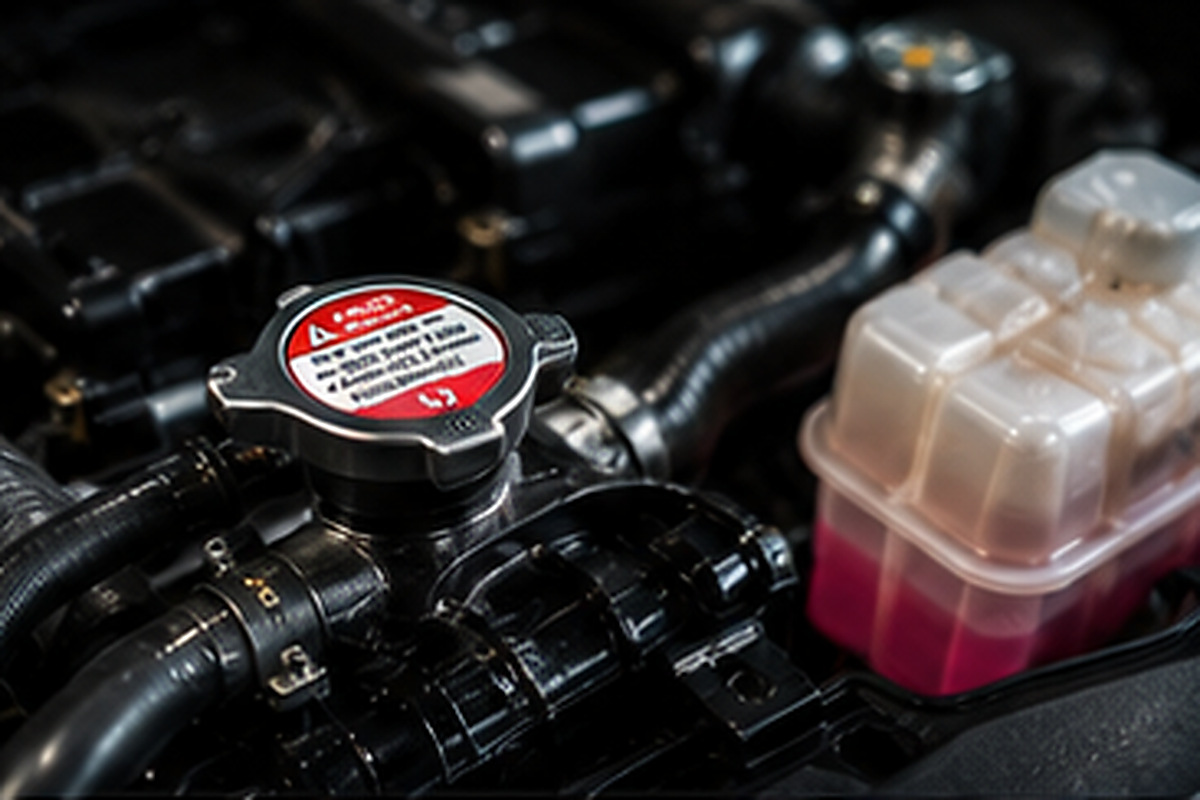
The cooling system controls engine temperature by circulating coolant through the engine and radiator. Heat transfers from the engine into the coolant, then airflow through the radiator removes that heat. The thermostat regulates circulation, the water pump moves coolant, fans provide airflow when vehicle speed is low, and the pressure cap raises the coolant boiling point.
A failure in one area can affect the entire system. A small leak can lower the coolant level, trapped air can interrupt circulation, a weak cap can reduce pressure, a fan problem can cause overheating at idle, and a restricted radiator can reduce heat transfer under load.
Cooling-system diagnosis
A useful evaluation begins with the customer’s description and a cold visual inspection. Depending on the symptom, testing may include checking coolant level and condition, inspecting hoses and connections, pressure-testing the system, testing the cap, verifying thermostat operation, checking fan commands and fan circuits, measuring temperature differences, inspecting belt drive components, and evaluating water-pump operation.
If coolant loss is not visible, additional testing may be needed. A leak can appear only when the engine is hot, occur inside the heater case, or involve an internal engine concern. The goal is to identify both the source of coolant loss and any damage caused by overheating.
Radiator, thermostat, water pump, and cooling-fan concerns
- Radiator: leaks, damaged tanks, restricted passages, blocked fins, or poor airflow can reduce cooling capacity.
- Thermostat: a thermostat that does not open correctly can restrict circulation; one stuck open may contribute to slow warm-up or weak heat.
- Water pump: bearing noise, seal leakage, damaged impeller, or drive problems can reduce coolant circulation.
- Cooling fans: a failed motor, relay, fuse, wiring issue, sensor input, or control command can prevent needed airflow.
- Hoses and connections: age, swelling, soft spots, cracks, loose clamps, and damaged fittings can cause leaks or collapse under operating conditions.
Coolant service and the correct fluid
Coolant is not universal. Vehicles may require different chemistry, concentration, and service procedures. Mixing incompatible coolant types or using the wrong water concentration can reduce corrosion protection and cooling performance. The correct specification should be determined from reliable vehicle information rather than coolant color alone.
A drain-and-fill, exchange, bleeding procedure, or repair refill may be appropriate depending on the vehicle and reason for service. Some systems require specific vacuum-filling or air-bleeding steps to prevent trapped air and repeat overheating.
Overheating safety
Do not remove a radiator cap or pressurized coolant cap while the system is hot. Hot coolant and steam can cause severe burns. If the gauge enters the hot range, a warning instructs you to stop, steam is visible, or the engine loses power, move to a safe location and shut the engine off. Continuing to drive can damage cylinder heads, head gaskets, pistons, bearings, catalytic converters, and other components.
Cooling-system and radiator repair in West Louisville
Starks Automotive provides a West Market Street contact for Louisville drivers with overheating, coolant-loss, radiator, hose, thermostat, water-pump, and cooling-fan concerns. Because the detailed service menu is still being verified, call first to confirm that the shop currently performs the required testing and repair for your vehicle.
Related concerns may also require engine repair evaluation, vehicle diagnostics, or electrical testing when a fan or control circuit is involved.
Frequently asked questions
What should I do if my temperature gauge moves into the hot range?
Turn off the air conditioner, move to a safe location, shut the engine off, and allow it to cool. Do not remove a hot radiator or coolant-reservoir cap. Call for guidance before continuing to drive.
Does an overheating engine always need a radiator?
No. Overheating can involve coolant loss, a thermostat, water pump, cooling fan, belt, hose, radiator restriction, pressure-cap problem, engine concern, or another cause. Testing should identify the failure before parts are selected.
Why does my vehicle lose coolant when I do not see a puddle?
A leak may occur only when the system is hot and pressurized, evaporate on a hot component, enter the passenger compartment through a heater-core leak, or be consumed internally. Inspection and pressure testing can help locate the source.
How do I request cooling-system or radiator service in Louisville?
Call Starks Automotive at (502) 776-8925 with the vehicle year, make, model, temperature symptoms, warning lights, visible leaks, and any recent coolant work. Call before visiting to confirm current service availability.